

Force for Freedom reframing Mental Health Care in California
Townhall PowerPoint
James B. (Jim) Gottstein, founder of the Law Project for Psychiatric Rights (PsychRights), campaigns against forced psychiatric drugging, electroshock, and incarceration. His presentation outlines the negative impacts of psychiatric drugs and the legal mechanisms available to protect patient rights.
CARE Court Impact Story Submission Invitation
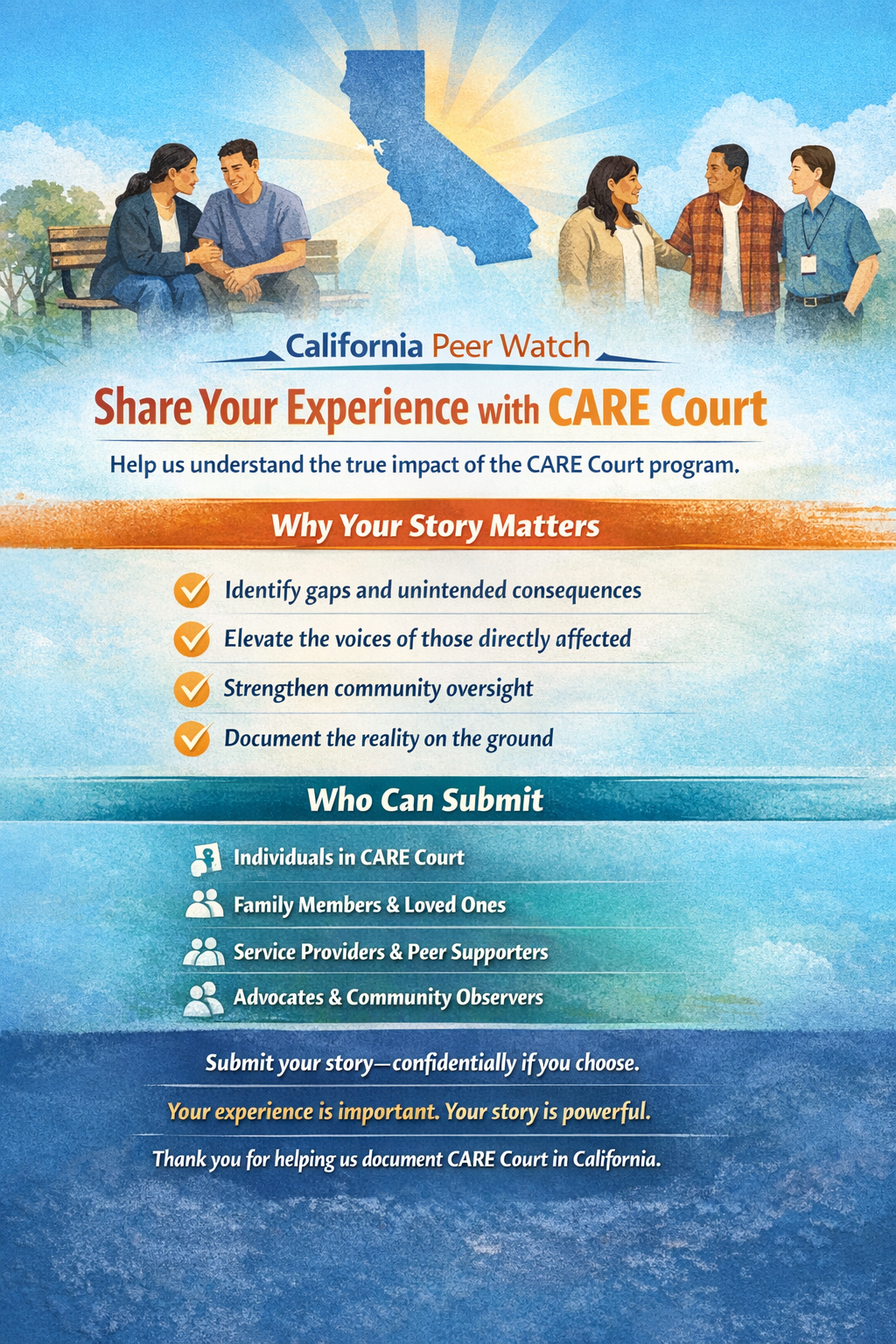
California Peer Watch is gathering personal stories and lived experiences from individuals, family members, and service providers impacted by California’s Community Assistance, Recovery, and Empowerment (CARE) Court program. Your voice matters, and your story can help illuminate how this system is affecting people and communities across the state.
We invite you to share your experience—positive, negative, or mixed. Every perspective helps build a clearer, more honest understanding of CARE Court’s real‑world impact. Your submission will support statewide advocacy, inform public education efforts, and help ensure that community voices remain at the center of policy conversations.
Why Your Story Matters
-
It helps identify patterns, gaps, and unintended consequences within the CARE Court system
-
It elevates the lived expertise of those directly affected
-
It strengthens community‑led oversight and accountability
-
It contributes to a more accurate public record of how CARE Court is functioning on the ground
Who Can Submit
-
Individuals who have been referred to or involved in CARE Court
-
Family members or loved ones
-
Peer supporters, clinicians, case managers, and service providers
-
Advocates, organizers, and community observers
Your submission can be as detailed or brief as you feel comfortable sharing. You may submit anonymously if you prefer.
Your experience is important. Your story is powerful. Thank you for helping us document the truth of CARE Court in California.
CARE Court Impact Story Submission
Insult to Injury
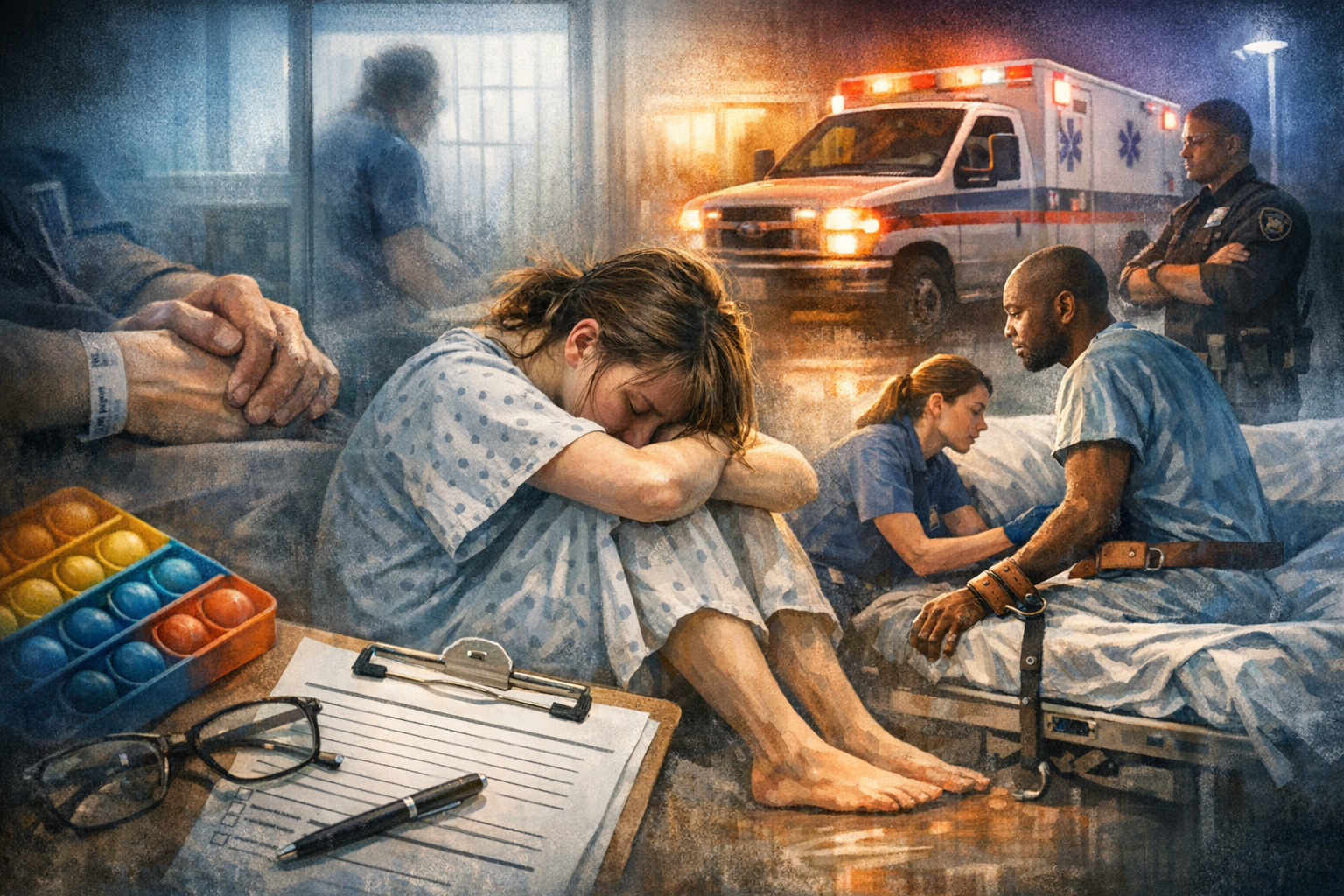
Many people in our communities have been placed under involuntary psychiatric holds (often called a 5150). These experiences can be confusing, frightening, and sometimes harmful — especially for neurodivergent people, disabled people, and those already in crisis.
We’re working to improve how the system treats people during these moments. To do that, we need real stories from those who’ve lived it.
If you or someone you know has gone through an involuntary hold, please consider sharing this survey. Your voice can help shape better policies, safer practices, and more compassionate care.
Insult to Injury: Experiences with involuntary commitment Survey
California Peer Watch is an organization of Mental Health Peers in California who are passionate advocates for a Person-Centered approach to mental health care. Unlike the traditional top-down approach favored by the government, California Peer Watch emphasizes the importance of involving individuals with lived experience in shaping mental health policies and services.